


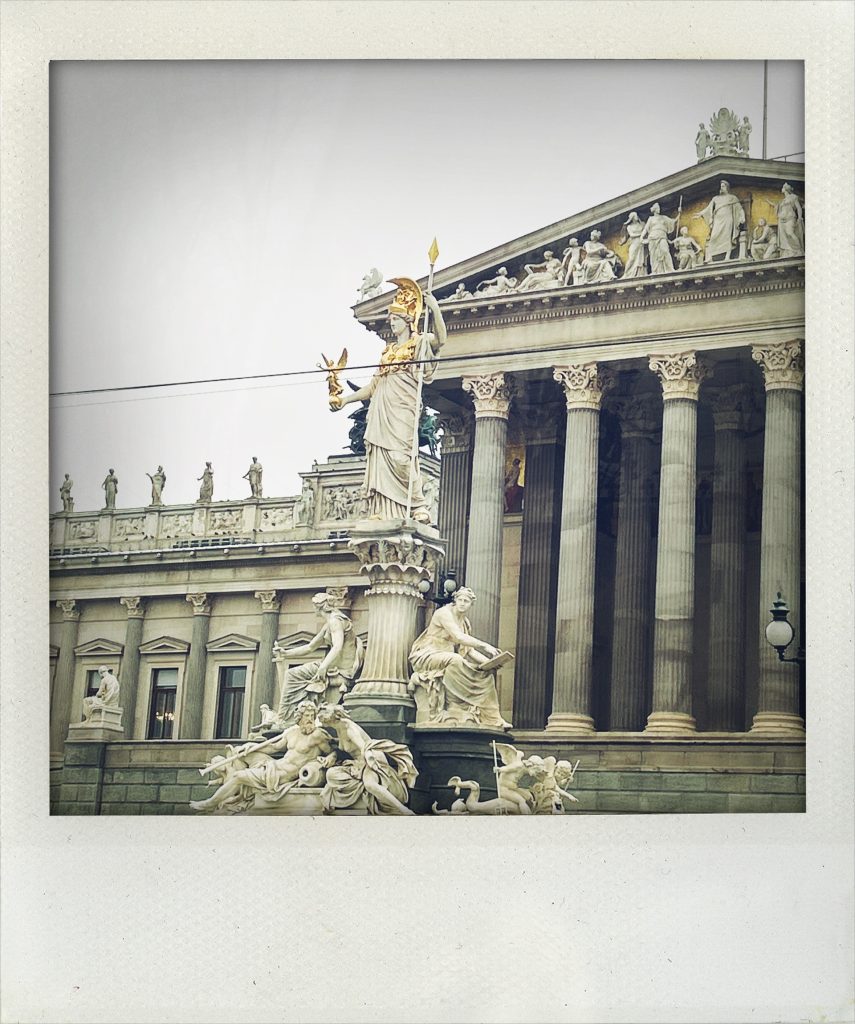
Introduction and Image: Athena watches over Vienna—and over this podcast. She is the goddess of metis: intelligence in motion, strategic imagination, and the art of finding a passage where brute force sees only a wall. Without Athena, Odysseus would remain merely a warrior lost at sea. Through her, he becomes the man of many turns, capable of disguise, invention, survival—and return. It is fitting, then, that our journey into Homer begins beneath her golden helmet: with a woman presiding over the story men have called heroic for almost three thousand years. © Regula Stämpfli 2026
Welcome to Art Is a Piece of Cake.
Today, I am speaking in English because Homer’s Odyssey has begun another voyage. Christopher Nolan has brought it into the cinema, and an ancient Greek poem has entered the vast machinery of the Anglo-American imagination: Hollywood, global audiences, heroic images, famous bodies and magnificent storms.
This is a wonderful moment to return to Homer.
The Odyssey has travelled for almost three thousand years. It has crossed languages, empires, religions and oceans because every age discovers another Ithaca inside it. Every generation recognises the longing to return, and every generation must decide what homecoming means.
Americans know something about journeys. Their literature begins again and again with departure: the ship, the frontier, the road, the promise of another life beyond the horizon. The British imagination knows the sea as history, empire, danger and desire. Homer’s voyage brings both traditions to a question that unsettles the heroic picture: What if the decisive adventure happens not only to the man who leaves, but also to the woman who remains?
Odysseus travels through monsters, temptations, shipwrecks and stories. Penelope travels through time.
She governs a house under occupation. She protects a son who is growing into danger. She keeps violent men at a distance through intelligence, performance and delay. At night, she unweaves what she has woven during the day. This famous gesture is often treated as a symbol of patience. I hear something more radical in it: Penelope controls the code.

Penelope in Munich — A poem by Regula Stämpfli
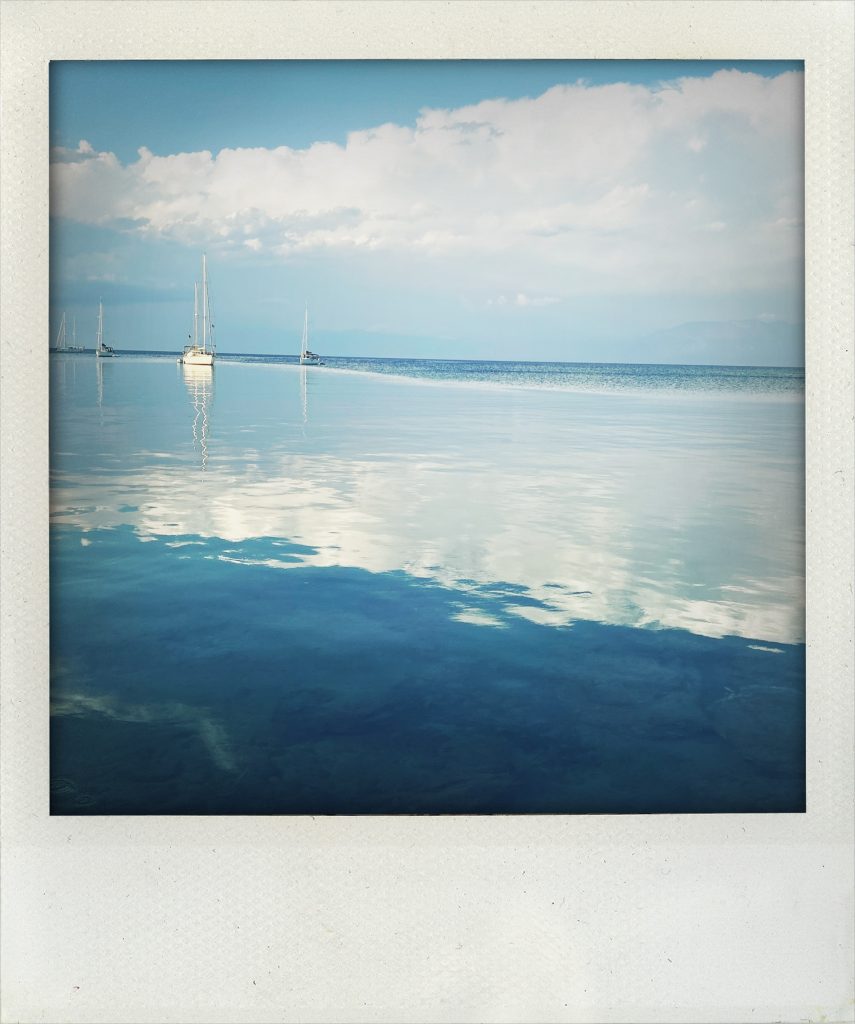
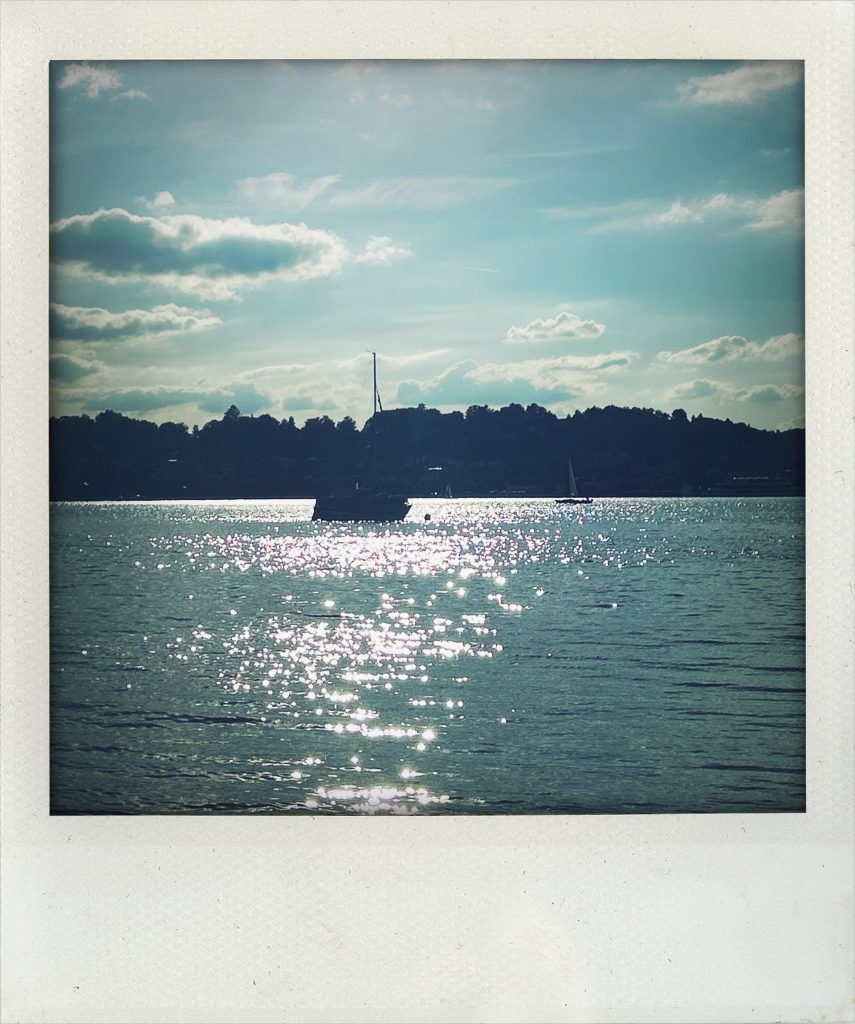
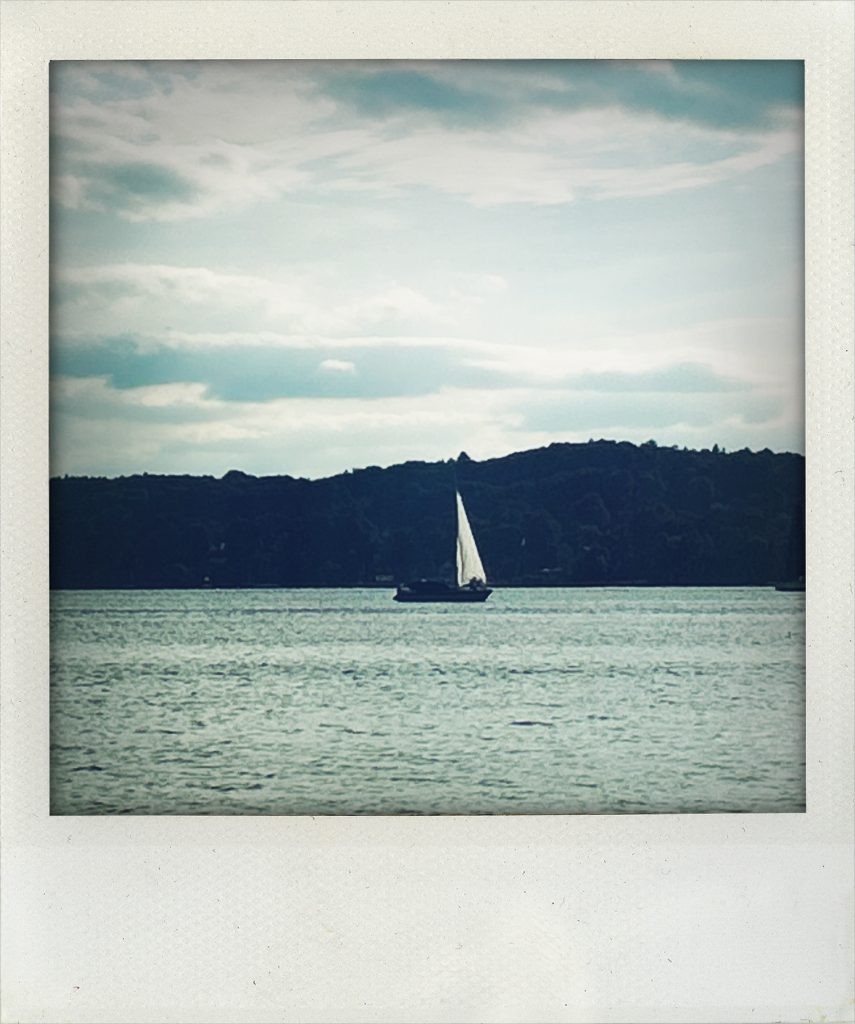
It is summer in Munich. Linden leaves hold the light, and the old palace walls breathe the cool breath of fountains. Swans move slowly through Nymphenburg green, as if beauty had never asked them to explain themselves. Munich has become my Ithaca. Arrival here is no harbour bell, no sudden shore. It is the work of every morning. I write. I loosen the thread. I write again. I wait—for no man, for no rescue, only for the world to remember its courage for kindness. Cats cross the rooms. Books climb the walls. Art lies open across the tables, each sheet of paper quietly certain that hope is a craft. My sons travel through worlds of their own. My beloved sails other waters. I tend no sacred hearth. I tend a life. And women come. They bring stories, wounds, weariness, and the old hunger for a room where no one has to fight. I open the door. I cook. I listen. I drive. I share. I have always believed that happiness grows when given away. Perhaps that has been my loveliest mistake. For sometimes another guest enters, silent and uninvited: an old shadow called comparison. Why her? Why not me? Why does light fall easily there while I carry stones? Then the eyes change. Praise retreats. Thanks lose their way. Beauty ceases to be shared and becomes an accusation—not because I own more, not because I know more, but because happiness in another woman can seem the cruellest injustice of all. Then I think of Penelope: the worker at the loom, the ruler of the interval, the woman who takes up the thread each day and wins the night back with her hands. And I think of the maids: how swiftly the powerless are made to carry the guilt of a ruined house; how men use their bodies, then call survival betrayal. This summer taught me another kind of weaving. I had made myself smaller so others might feel tall. I had lowered my light so no one need shield her eyes. I had mistaken gratitude for love. Then came the first No. A small word. One syllable. It passed through years like a bell through clear air. Since then I have known: friendship cannot live where one woman gives and another only takes. It lives in wonder, in gratitude, in two faces turned towards the same beauty. Our grandmothers cut paths through stone so that we might walk with lighter feet. We need not trade their freedom for bitterness. Today I open every window. Air crosses the rooms. I hide nothing. I take my place inside my own life. I am not alone. I am with myself. I am not waiting. Perhaps this is the truest Ithaca: the place where Penelope is free. Free to say no—even without a man at her side.
© Regula Stämpfli 2026