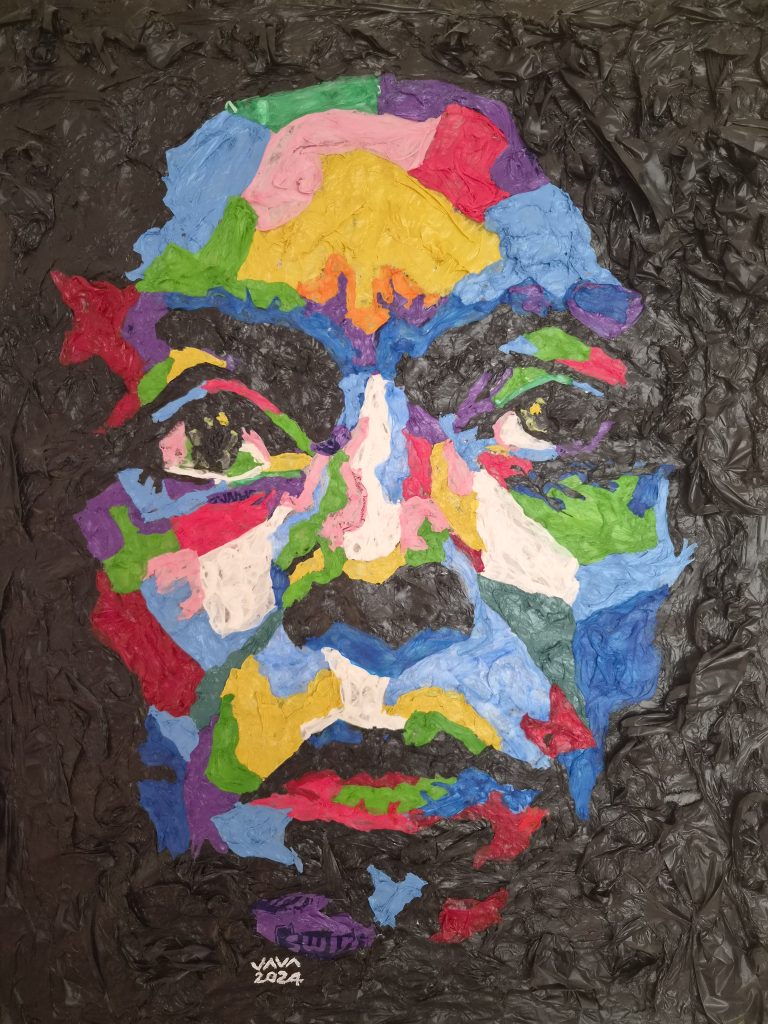
Thomas Vava is one of those artists who do not simply paint pictures, but build an entire world through colour, textures, plastics and other material. Born in 1992 in the war-scarred region of northern Uganda, he now lives and works between in Vienna. His portraits combine memory, fabric, the human body and colour in a distinctive visual language. Thomas Vava may still be considered an emerging artist. I am convinced that this will not be the case for much longer. See also: https://www.kuenstlerhaus.at/besuch/kalender/ausstellung/478/passion.html
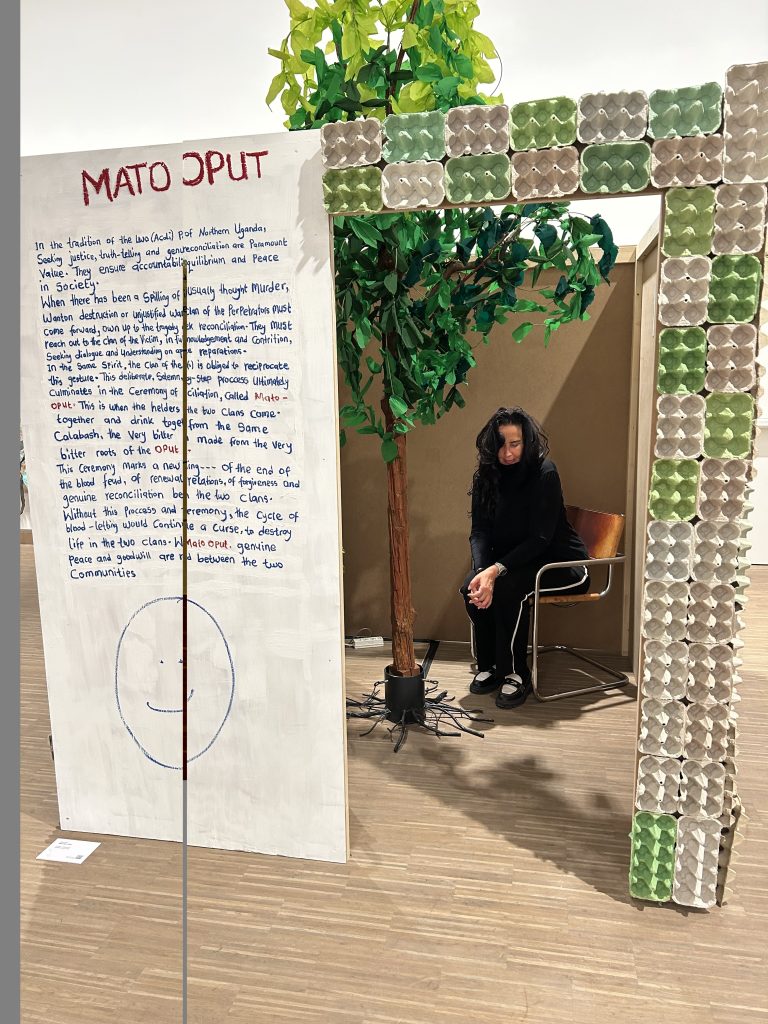
In this Episode we talk about Memories, about Thomas Vava being totally silent in his childhood, having the most traumatic experiences and becoming such a great artist who works with everything: Textiles, Plastic, Colors, Music, about his very traumatic childhood and how to heal. It was a healing experience of itself to talk with the great African artist Thomas Vava and his Mato Oput.
1. Thomas, when you begin a portrait, what do you see first?
Do you first see the eyes, the face, the colours—or something inside the person that other people do not see?
2. You did not speak for many years as a child. Did painting become your first language?
Was there a moment when you understood: I can say something with an image that I cannot say with words?
3. You grew up in Uganda and experienced things that no child should have to experience. What place does memory have in your art today?
You do not have to describe what happened. I would like to understand how memory becomes colour, fabric, gesture or silence in your paintings.
4. A priest taught you English, and you began earning your living by painting portraits. Who was the first person who truly believed that you were an artist?
And when did you begin to believe it yourself?
5. You became known as a portrait painter and as an extraordinary speed painter. What happens inside you when you paint in front of an audience?
Do you feel pressure—or does the speed free you from thinking too much?
6. Your portraits and your use of African fabrics create a very distinctive visual language. What do these fabrics carry for you?
Are they colour, history, identity, protection—or perhaps all of these things together?
7. Raimund Deininger brought you to Vienna and supported your path to the Academy of Fine Arts. What did Raimund recognize in you?
What did his friendship make possible—and what changed in your life and work after his death?
8. At the Academy, ideas such as reconciliation and forgiveness became important in your work. Tell us more.
Is forgiveness a gift, an obligation, a ritual—or something that may remain impossible?
9. You have already sold many paintings, you study in Vienna and received an important residency in Canada. Yet every artist can reach a moment of uncertainty.
Which subjects, faces or colours are calling you back, which bring you forward?
10. Imagine that we meet again in ten years and your work is hanging in major museums around the world. What should people recognize immediately when they see a Thomas Vava?
And what would you like them to feel before they even know your extraordinary life story?
Regula Staempfli collects Thomas Vavas Art. To contact Thomas Vava visit his gallery artcare.at and Thomas Vavas Instagram Account: https://www.instagram.com/thomas.vava_artist/